
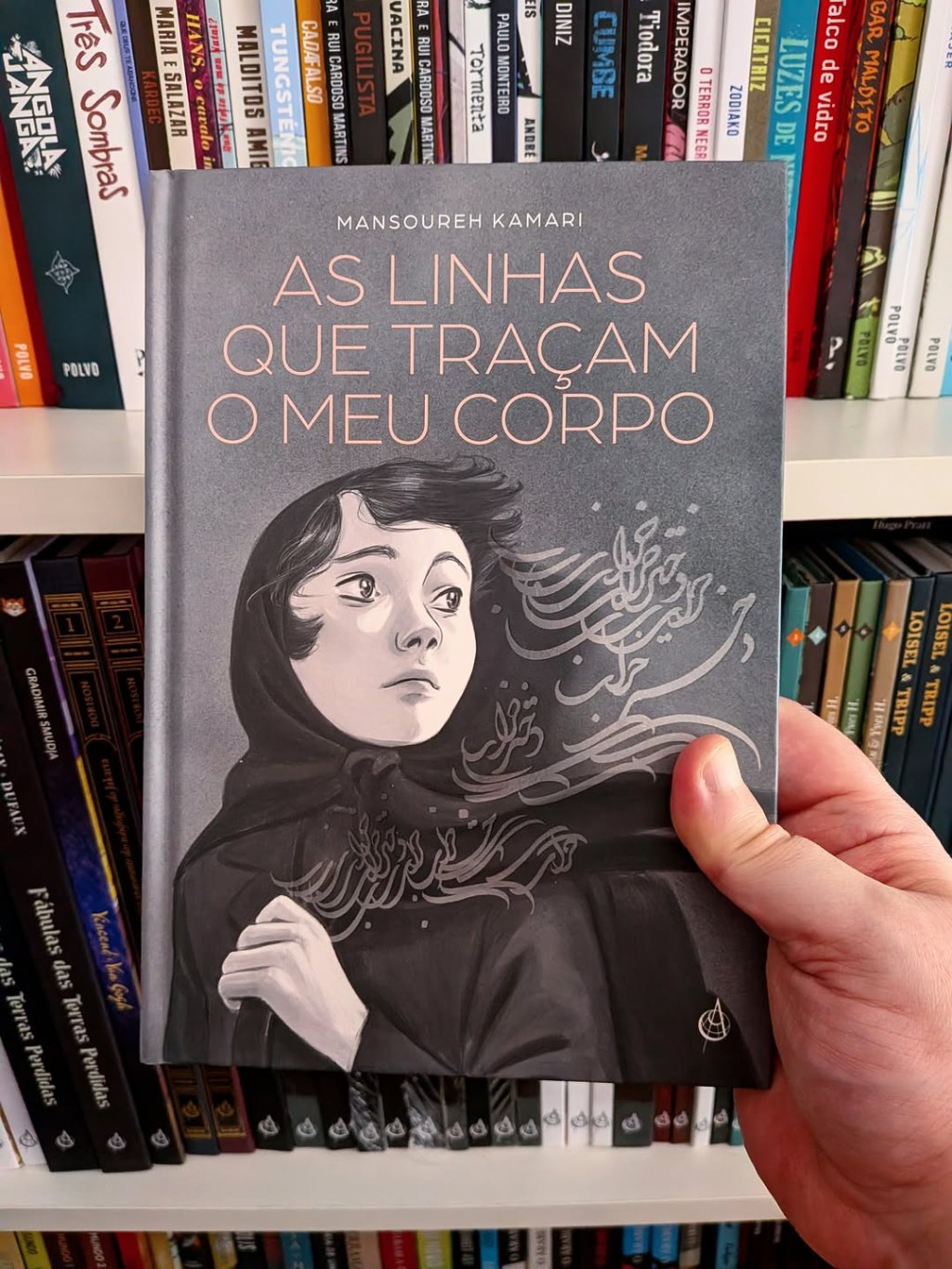
📚 Book Review: As Linhas que Traçam o Meu Corpo
📖 Author(s): Mansoureh Kamari
💭 My Thoughts:
🇵🇹 Ao terminar a leitura desta obra, faltam-me palavras. Resta-me quase o silêncio, não por ausência de reflexão, mas porque o conteúdo é tão duro que se torna difícil traduzi-lo em discurso. Ainda assim, é importante falar sobre ele.
Nos últimos anos tem-se assistido a uma maior visibilidade de autores e artistas iranianos e de outras regiões do Médio Oriente. Trata-se de um fenómeno interessante, que se compreende melhor quando se lêem estas obras.
Mansoureh Kamari, nascida em Teerão e atualmente a viver em França, apresenta-nos nesta obra um fragmento da sua infância. O que significa crescer enquanto mulher numa cultura que ainda trata as mulheres como cidadãs de segunda categoria, mais como utilidade social do que como indivíduos com identidade própria. Ao longo da narrativa, expõe sentimentos e dificuldades vividas durante o seu crescimento naquele contexto. Ainda que parte deste tipo de realidade já me fosse conhecida através de outras obras, a forma íntima como Kamari a relata faz com que quase nos coloquemos no lugar da menina de nove anos que ela foi, sentindo o que ela sentiu. É difícil não reagir com empatia profunda e desconforto.
Prefiro não entrar em exemplos concretos nem detalhar o conteúdo, pois considero que esta é uma obra que deve ser lida sem conhecimento prévio. Ainda assim, é impossível ignorar a tristeza profunda de constatar que, em pleno século XXI, continuam a existir níveis tão elevados de opressão e de desumanização. Há um episódio envolvendo duas adolescentes — penso que primas da autora, embora possa estar enganado — que é particularmente perturbador, marcado por actos bárbaros, cobardes e sem qualquer honra, de uma violência extrema e difícil de conceber.
No fundo, o mais adequado é mesmo ler a obra, porque qualquer tentativa de a resumir dificilmente fará justiça ao seu impacto. O leitor deve preparar-se para um aperto constante no peito e para uma forte revolta perante as injustiças retratadas.
Kamari, obrigado por este testemunho. Que a vida te proteja e que nunca mais tenhas de atravessar um inferno semelhante.
—
🇬🇧 After finishing this work, I find myself almost without words. What remains is a kind of silence—not from lack of reflection, but because the content is so difficult that it resists translation into speech. Still, it is important to speak about it.
In recent years, there has been a growing visibility of Iranian authors and artists, as well as creators from other parts of the Middle East. It is an interesting phenomenon, and one that becomes clearer once these works are read.
Mansoureh Kamari, born in Tehran and now living in France, offers in this work a fragment of her childhood. It is the experience of growing up as a girl in a culture that still treats women as second-class citizens, more as instruments of social function than as individuals with their own identity. Throughout the narrative, she conveys the emotions and difficulties she faced while growing up in that environment. Even though I was already familiar with some of these realities through other works, the intimacy of Kamari’s storytelling makes it feel as if we are placed inside the experience of the nine-year-old girl she once was, feeling what she felt. It is difficult not to respond with deep empathy and unease.
I prefer not to give concrete examples or go into specific details of the content, as I believe this is a work best approached without prior knowledge. Even so, it is impossible to ignore the profound sadness of seeing that, in the 21st century, such levels of oppression and dehumanisation still exist. There is a passage involving two teenagers—possibly her cousins, though I may be mistaken—that is particularly disturbing, marked by barbaric, cowardly acts devoid of any honour, and an extreme violence that is difficult to comprehend.
Ultimately, the best approach is simply to read the work, as any summary would struggle to do it justice. The reader should be prepared for a constant tightening in the chest and a strong sense of indignation in the face of the injustices portrayed.
Kamari, thank you for this testimony. May life protect you, and may you never again have to endure a hell like the one you describe.
⭐ Rating: ⭐⭐⭐⭐⭐
✨ Publisher: @arte_de_autor
🔗 Instagram: https://www.instagram.com/p/Da5Pc4VCn0f/
🔗 Goodreads: https://www.goodreads.com/review/show/8736359417


Leave a Reply